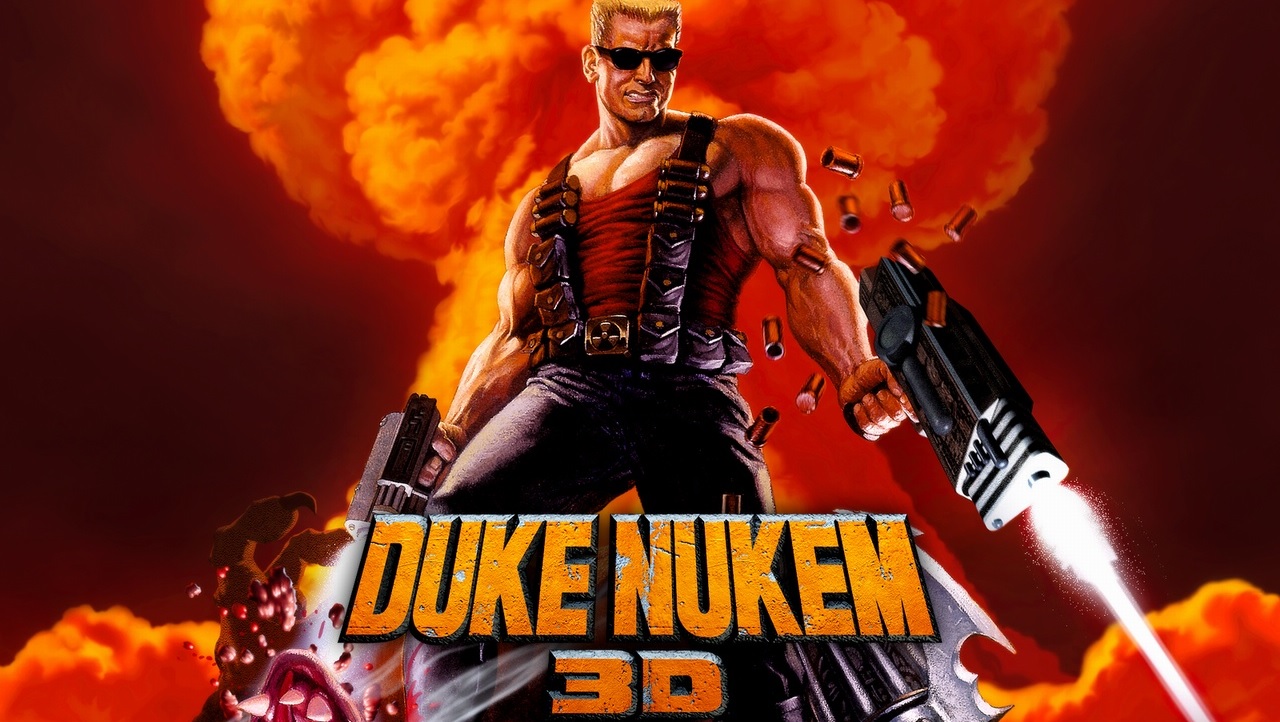
When Attitude Was a Feature
Why Duke Nukem 3D Was More Than One-Liners
Behind the jokes and bravado, Duke Nukem 3D quietly redefined level design. Interactive environments, destructible elements, and vertical combat made its worlds feel alive.
Duke didn’t just run through levels—he inhabited them. The humor got attention, but the design earned loyalty.
Levels felt grounded in recognizable places—city streets, movie theaters, strip clubs, rooftops—rather than abstract corridors. That familiarity made the chaos hit harder. You weren’t navigating a maze; you were tearing through a space that felt like it existed before you showed up.
Interactivity was everywhere. Light switches, security cameras, breakable glass, hidden panels—small touches that made you poke at the environment just to see what would happen. It encouraged curiosity in a way most shooters at the time didn’t.
Combat benefited from that design. Enemies attacked from above and below, ambushes came from unexpected angles, and verticality forced you to think beyond flat movement. It wasn’t just about reflexes—it was about awareness of space.
The tone tied it all together. Duke’s personality could have easily overwhelmed the game, but instead it gave context to everything you were doing. The world reacted to him, and he reacted right back, creating a strange sense of presence that went beyond simple player control.
That’s why it stuck. Strip away the one-liners and what remains is a game that pushed interaction, spatial design, and player engagement forward in ways that still feel relevant. The attitude got people in the door, but the depth is what kept them there.