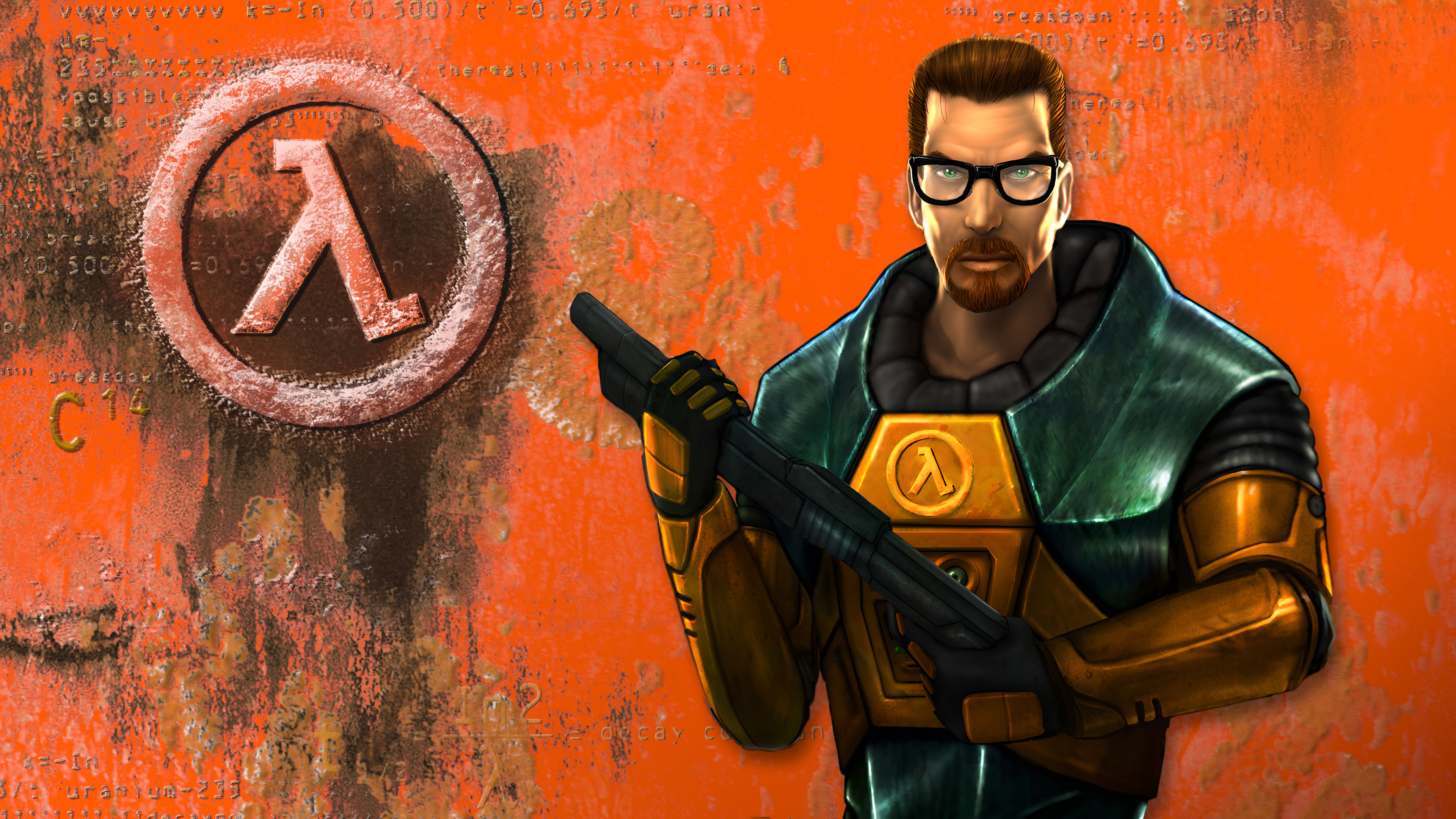
The Shooter That Made You Think
How Half-Life Changed Storytelling Forever
Before Half-Life, shooters paused the action to tell stories. After Half-Life, the story was the action. No cutscenes. No fade-outs. Just a bad day at work that kept getting worse.
Valve proved that scripted events could happen around the player instead of at them. The result was immersion so strong that even silent protagonists felt human. The industry took notes—and never stopped copying.
What really set it apart was control. The game almost never took it away from you. You could look around during conversations, walk off mid-sentence, or ignore things entirely. It created the illusion that everything was happening whether you participated or not. That alone made Black Mesa feel less like a series of levels and more like a real place unraveling in real time.
The pacing played a huge role too. Quiet moments—scientists talking, machinery humming—gave context to the chaos that followed. When things went wrong, it wasn’t just another mission objective. It felt like a catastrophic failure of a system you had just been walking through minutes earlier.
Even small details mattered. NPCs reacted to you, doors opened with purpose, and scripted sequences were timed to feel natural instead of theatrical. Nothing screamed “this is a set piece,” even though that’s exactly what they were. The trick was that you were always inside them, never watching from the outside.
That approach rewired expectations. Suddenly, players didn’t want story breaks—they wanted story integration. Half-Life showed that narrative and gameplay didn’t have to compete for attention. They could be the same thing, happening at the same time, without interruption.
Decades later, that design still echoes through the industry. Whether it’s subtle environmental cues or large scripted moments, the blueprint is unmistakable. Half-Life didn’t just raise the bar—it quietly replaced it with something else entirely.