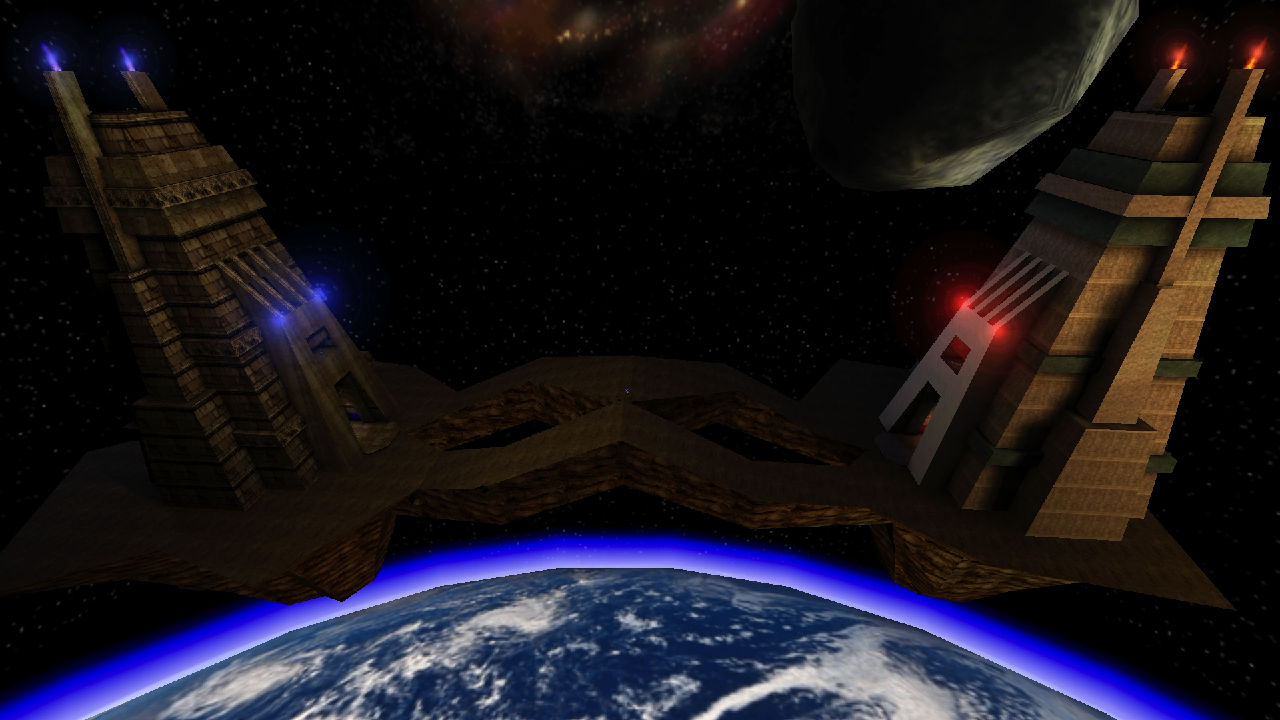
Before Photorealism, There Was Atmosphere
Why Unreal Still Feels Alien Decades Later
Unreal didn’t just want to scare you—it wanted to disorient you. From the moment you crash-landed on Na Pali, the world felt vast, lonely, and hostile in a way few shooters had attempted.
Its dynamic lighting, massive outdoor spaces, and moody soundtrack made exploration as important as combat. Even today, Unreal’s sense of place feels more “real” than many technically superior games that followed.
What made it work wasn’t just technology, though at the time it was pushing things far beyond its peers. It was the pacing. Long stretches without enemies, broken only by ambient sounds or distant movement, forced you to slow down and absorb your surroundings. The game trusted you to feel small in its world, rather than constantly empowering you.
Na Pali itself felt cohesive in a way that many modern games still struggle to achieve. You weren’t just moving through disconnected levels—you were traveling across a believable landscape. Ancient temples, crashed ships, and quiet villages hinted at a larger story without spelling it out. It was environmental storytelling before that became an industry buzzword.
Even the combat fed into the atmosphere. Weapons felt strange and unfamiliar, enemies behaved unpredictably, and encounters often felt like intrusions into a world that existed without you. You weren’t the center of it—you were surviving in it.
That’s why Unreal still holds up. Not because it looks better, but because it understood something many modern games forget: realism isn’t about visual fidelity—it’s about creating a place that feels alive, mysterious, and just a little bit indifferent to your presence.